The Complete Guide to Single Origin Coffee: Everything You Need to Know
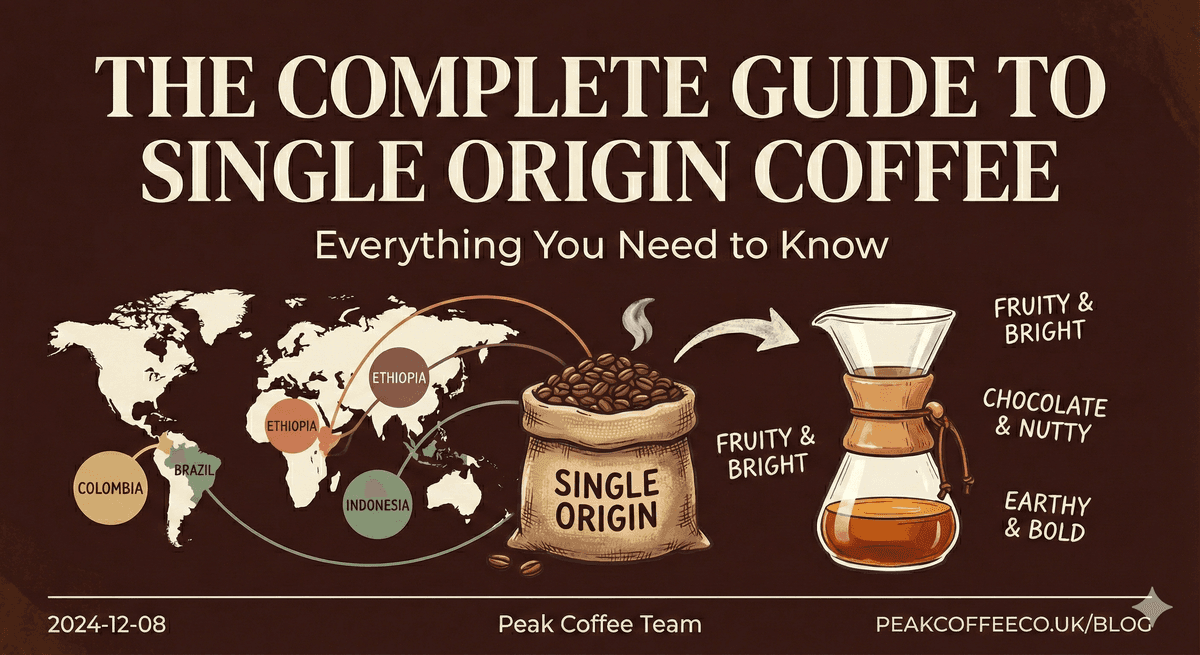
Single origin coffee has become one of the most sought-after categories in the specialty coffee world. But what exactly makes these beans so special, and how do you choose the right one for your taste? In this comprehensive guide, we'll explore everything you need to know about single origin coffee - from understanding its unique characteristics to mastering the perfect brew.
Not sure which coffee suits you?
25% off your first 2 deliveries when you subscribe. Shop coffee →
What is Single Origin Coffee?
Single origin coffee refers to beans sourced from one specific geographic location. This could mean:
- Single country: All beans come from one nation (e.g., Ethiopian coffee)
- Single region: Beans from a specific area within a country (e.g., Yirgacheffe, Ethiopia)
- Single farm/estate: Beans from one specific farm (also called "single estate" coffee)
- Single lot: Beans from a specific harvest or processing batch
The key distinction is traceability. Unlike blends, which combine beans from multiple sources, single origin coffee allows you to taste the unique characteristics that a specific terroir - the combination of soil, climate, altitude, and processing methods - imparts to the coffee.
Why Choose Single Origin Over Blends?
Both single origin and blended coffees have their place, but single origin offers some distinct advantages:
Unique Flavor Profiles
Each growing region produces coffee with distinctive taste characteristics. Ethiopian coffees burst with fruity, wine-like notes, while Brazilian beans offer smooth chocolate and nut flavors. Single origin lets you experience these unique profiles in their purest form.
Full Traceability
You know exactly where your coffee comes from, often down to the specific farm or cooperative. This transparency helps you support specific farming communities and ensures accountability in sourcing practices.
Seasonal Freshness
Like wine, coffee has seasons. Single origins are often available as limited seasonal offerings, allowing you to taste beans at their peak freshness shortly after harvest.
Educational Journey
Exploring single origins is one of the best ways to develop your palate and understand how different factors affect coffee flavor.
Ethical Sourcing
Traceability makes it easier to verify that farmers receive fair compensation and that sustainable practices are followed.
Major Single Origin Coffee Regions
Africa
Ethiopia As the birthplace of coffee, Ethiopia produces some of the world's most distinctive beans. Expect bright, fruity flavors with wine-like acidity and floral aromatics. Key regions include Yirgacheffe (delicate, tea-like), Sidamo (balanced, fruity), and Harrar (wild, berry notes).
Rwanda Rwandan coffees have gained recognition for their bright acidity and clean, citrusy flavors. Often featuring notes of red fruit, orange, and honey, these coffees represent Africa's growing specialty coffee reputation.
Kenya Kenyan coffee is known for its bold, complex character with bright acidity. Expect notes of blackcurrant, tomato, and citrus with a wine-like body.
Central and South America
Colombia Colombian coffee is celebrated worldwide for its exceptional balance. Expect medium body, caramel sweetness, mild citrus acidity, and nutty undertones. Regions like Huila, Nariño, and Tolima each offer distinct characteristics.
Brazil The world's largest coffee producer, Brazil creates smooth, full-bodied coffees with low acidity. Prominent notes include chocolate, nuts (particularly peanut and hazelnut), and caramel sweetness - perfect for espresso.
Guatemala Guatemalan coffees benefit from volcanic soil and high altitude. Expect full body, rich chocolate notes, subtle spice, and bright fruit acidity. Antigua and Huehuetenango are particularly renowned regions.
Asia and Indonesia
Indonesia (Sumatra) Indonesian coffees are famous for their earthy, full-bodied character. Sumatran beans often feature notes of tobacco, cedar, and dark chocolate with low acidity and a syrupy body - distinct from any other origin.
India Indian coffees, particularly Monsooned Malabar, offer unique flavors developed through exposure to monsoon winds. Expect earthy, mellow cups with spicy undertones.
How Origin Affects Flavor
Several factors contribute to a coffee's distinctive taste:
Altitude
Higher altitudes (1,400-2,000+ meters) produce denser beans with more complex, acidic flavors. Lower altitudes create fuller-bodied, less acidic coffees.
Climate
Consistent rainfall, temperature variations between day and night, and adequate sunshine all affect how flavors develop in the cherry.
Soil Composition
Volcanic soil, common in regions like Guatemala and Indonesia, imparts mineral notes and contributes to coffee complexity.
Coffee Variety
Different varieties (Bourbon, Typica, Gesha, SL28) have inherent flavor characteristics that interact with terroir.
Processing Method
- Washed/Wet Process: Creates cleaner, brighter, more acidic coffees
- Natural/Dry Process: Produces fruitier, more full-bodied coffees
- Honey Process: Falls between washed and natural, offering sweetness and body
How to Brew Single Origin Coffee
Single origin coffees often shine brightest with brewing methods that highlight their nuanced flavors.
Best Brewing Methods
Pour Over (V60, Chemex) The clean, clear extraction of pour-over methods lets subtle origin characteristics shine. This is ideal for lighter roasts and coffees with complex acidity.
AeroPress Versatile and forgiving, the AeroPress can highlight different aspects of a coffee depending on your recipe. Great for experimenting with single origins.
Filter/Drip A well-made filter coffee produces a clean cup that showcases origin flavors while being accessible for everyday drinking.
French Press The full immersion method extracts more body and oils, which can complement earthier single origins like Indonesian coffees.
Brewing Tips for Single Origin
- Use lighter roasts: Lighter roasts preserve more origin characteristics than darker roasts
- Grind fresh: Freshly ground beans release more aromatic compounds
- Mind your water: Use filtered water at 92-96°C (just off the boil)
- Experiment with ratios: Start with 1:16 (coffee to water) and adjust to taste
- Take notes: Track what you enjoy to guide future purchases
How to Choose Your First Single Origin
If you're new to single origin coffee, here's how to find your perfect match:
Start with Your Flavor Preferences
If you like chocolate and nuts: Try Brazilian or Colombian coffee If you prefer fruity and bright: Start with Ethiopian or Rwandan If you enjoy bold and earthy: Indonesian Sumatra is your friend If you want balanced and smooth: Colombian or Guatemalan is ideal
Consider Your Brewing Method
- Espresso lovers: Brazilian and Colombian coffees work beautifully
- Pour-over enthusiasts: Ethiopian and Kenyan coffees shine here
- French press fans: Indonesian and darker-roasted Central Americans excel
Read Tasting Notes
Specialty roasters provide tasting notes that can guide your selection. Don't worry if your palate doesn't pick up every note listed - these develop over time.
Try a Tasting Flight
Many roasters offer sample packs or tasting flights that let you compare multiple origins side by side - an excellent way to discover your preferences.
Single Origin vs Single Estate vs Micro-Lot
These terms are often confused, but there are important distinctions:
Single Origin: Beans from one country or region. Broader category, may include multiple farms.
Single Estate/Farm: Beans from one specific farm or estate. More specific traceability and often more consistent flavor profiles.
Micro-Lot: A small, exceptional batch from a specific section of a farm or a particular processing experiment. Usually the highest quality and most limited availability.
Storing Your Single Origin Coffee
To preserve those distinctive flavors:
- Store in an airtight container away from light, heat, and moisture
- Buy whole beans and grind just before brewing
- Use within 2-4 weeks of the roast date for optimal freshness
- Avoid refrigerating or freezing unless storing for extended periods
The Future of Single Origin Coffee
The single origin movement continues to evolve:
- Direct trade relationships are increasing, benefiting farmers and improving quality
- Climate change is challenging traditional growing regions while opening new ones
- Processing innovations are creating new flavor possibilities
- Consumer education is driving demand for transparency and quality
Conclusion
Single origin coffee offers a window into the world's diverse coffee-growing regions, each with unique characteristics shaped by geography, climate, and tradition. Whether you're drawn to the fruity complexity of Ethiopian Yirgacheffe, the smooth chocolate notes of Brazilian Santos, or the earthy depth of Sumatran Mandheling, there's a single origin waiting to become your new favorite.
The best way to explore is simply to start tasting. Pick an origin that intrigues you, pay attention to the flavors in your cup, and let your palate guide you on a journey around the coffee world.
Ready to begin your single origin journey? Browse our single origin collection to discover premium, ethically sourced coffees from the world's finest growing regions.