How Swiss Water Decaf Is Made, and Why It Still Tastes Like Coffee
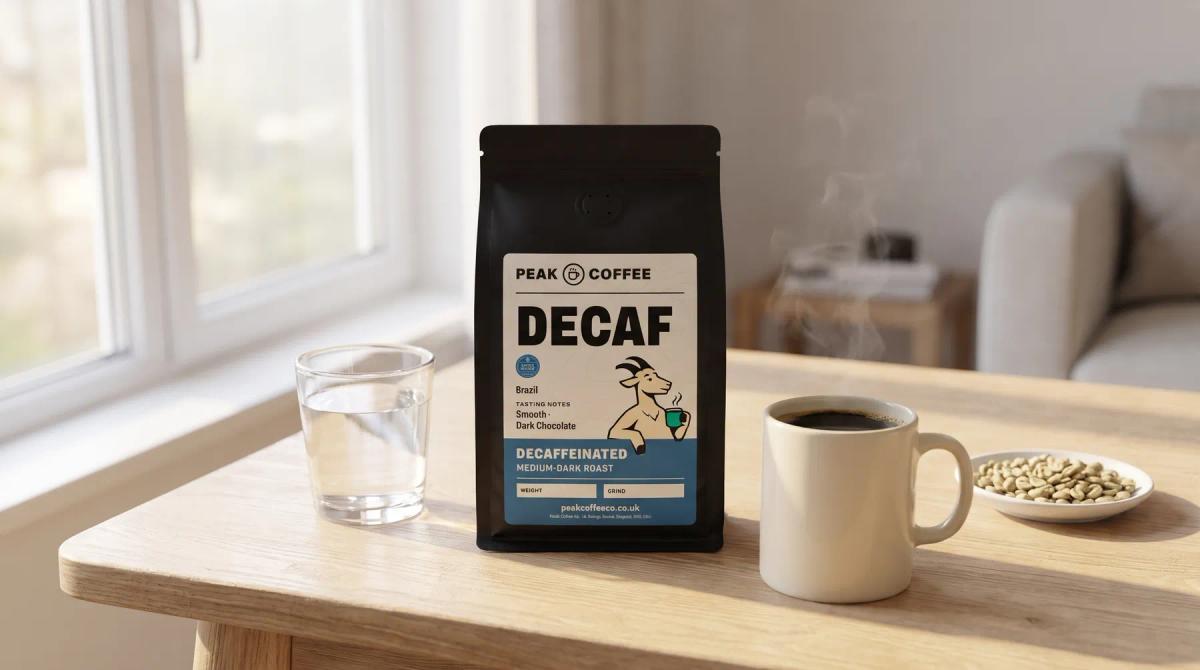
Decaf has a poor reputation, and for a long time it deserved one. Much of it was cheap coffee, decaffeinated harshly and then roasted dark to hide the damage. It doesn't have to be like that.
Our Decaf is a Brazilian coffee decaffeinated with the Swiss Water process, which is why the label carries the Swiss Water mark. Here is what that means.
Not sure which coffee suits you?
25% off your first 2 deliveries when you subscribe. Shop coffee →
How caffeine is usually removed
Caffeine has to come out while the beans are still green, before roasting. The most common methods soak or steam the beans and then use a chemical solvent to bind to the caffeine and carry it away. These methods are approved and widely used, but many people would rather their coffee hadn't been through them.
How the Swiss Water process works
The Swiss Water process uses water, temperature and time, and no chemical solvents. In outline:
- The green beans are soaked in water so they swell and the caffeine can move.
- They sit in water that is already full of coffee's flavour compounds but has no caffeine in it. Because that water is already saturated with flavour, the flavour stays in the beans. The caffeine is the only thing with somewhere to go, so it moves out into the water.
- The water passes through carbon filters that trap the caffeine, and then goes round again.
- This repeats for several hours until the beans are decaffeinated. Swiss Water states that its process removes 99.9% of the caffeine.
- The beans are dried and are then ready to be roasted like any other coffee.
The clever part is step two. Plain water would wash out flavour along with the caffeine. Water that is already full of flavour can't take any more, so only the caffeine leaves.
What it tastes like
Ours is a medium-dark roast with a full body, dark chocolate notes and very little sharpness. It is smooth black and it holds up in milk, so it works as an evening flat white as well as an after-dinner cafetière.
It suits every brewing method we grind for: espresso, filter and cafetière, or whole bean if you have a grinder.
Is it completely caffeine-free?
No decaf is. A tiny trace remains, which is why the figure is 99.9% and not 100%. If you have been told to avoid caffeine altogether for medical reasons, ask your doctor whether decaf is suitable.
Who buys it
More people than you might think. Decaf is one of our best-selling coffees. Some customers drink nothing else. Many more keep a bag next to their regular coffee for the afternoon and evening, so they can have another cup without lying awake.
If you'd like to do the same, Decaf comes in 250g, 500g and 1kg. Our guide to bag sizes will help you choose.